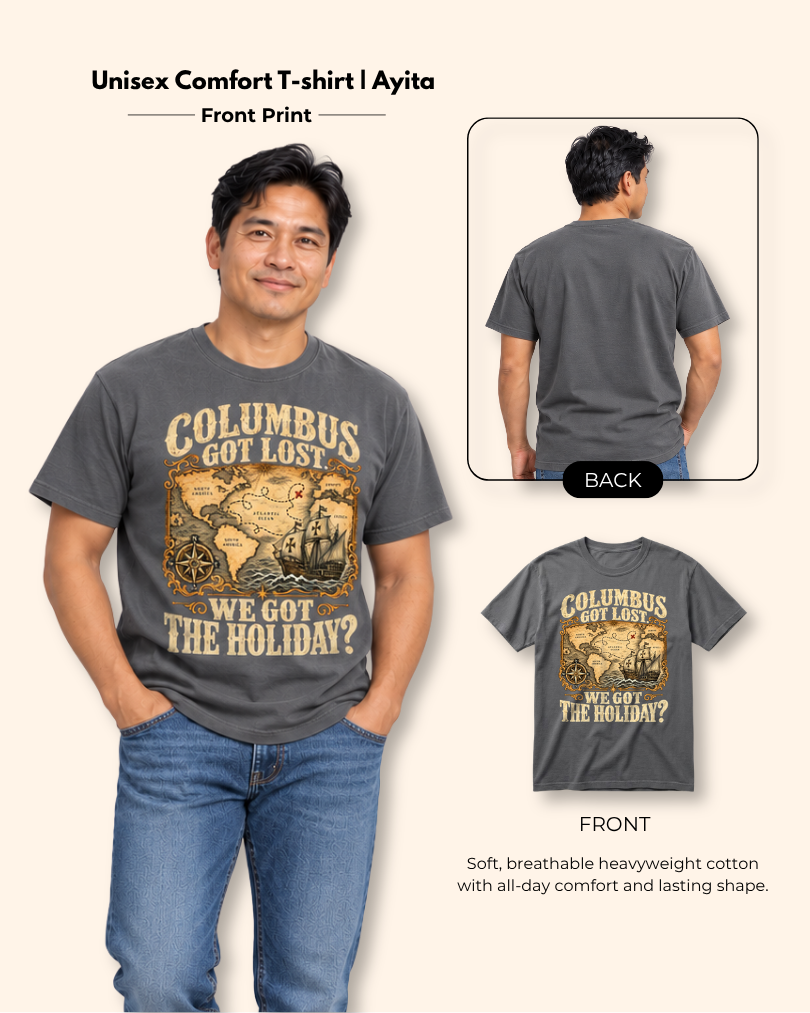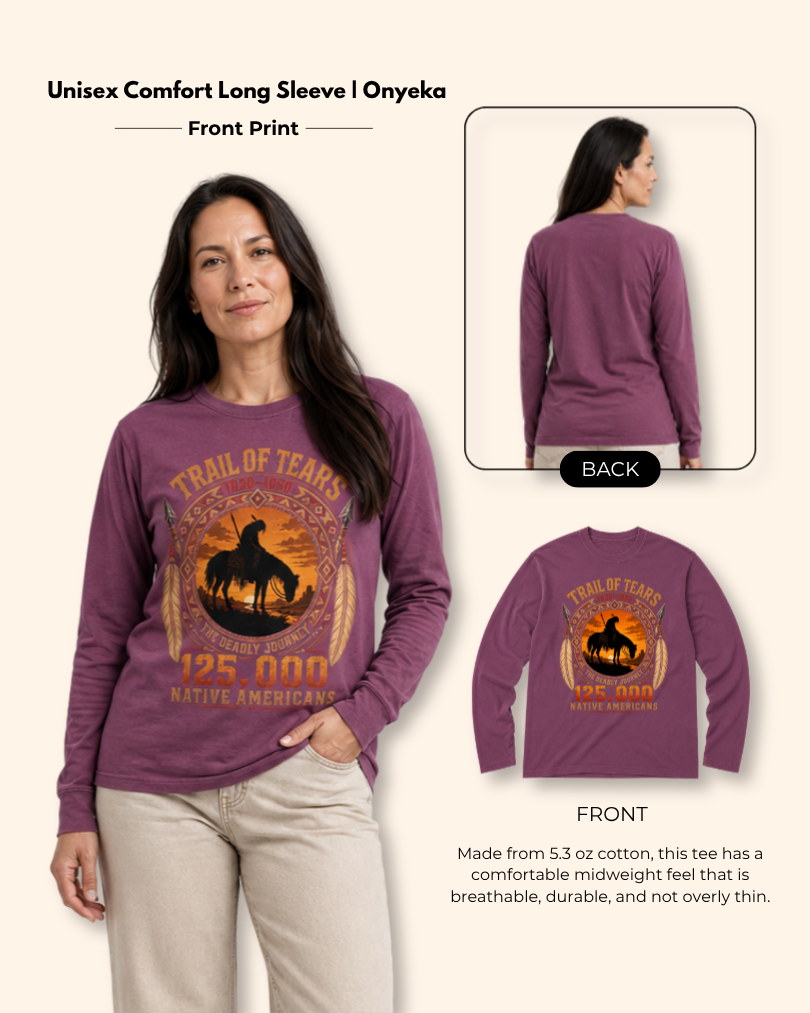
Every design we make starts the same way: with something specific. A name. A year. A distance. A count.
Specific beats loud
A shirt that says something general gets read once and filed away. A shirt that carries 1830-1850, or 300 miles, or a name most people have never seen makes a stranger stop and ask what it means. That question is the entire point. The shirt is not the message — it is the reason the message gets spoken out loud, by you, to someone who was not looking for it.
What that costs us
It means we cannot design fast. Before anything goes on cotton we have to find where the fact comes from — a park service page, a treaty text, a tribal archive. Some designs die at that step because the number that made them powerful turns out to be somebody's guess repeated for forty years.
We would rather lose the design than print the guess. If a shirt teaches someone something false, they will eventually find out, and then everything else we printed becomes suspect too.
The test
Before a design ships, it has to pass one question: could the person wearing this explain it in two sentences to someone who asks? If it needs a paragraph, it is not a shirt. It is an essay, and it belongs here in the Journal instead.