Ask most Americans to name a forced removal and they will name one. There were many. This is the one that happened in living memory of the last.
1864
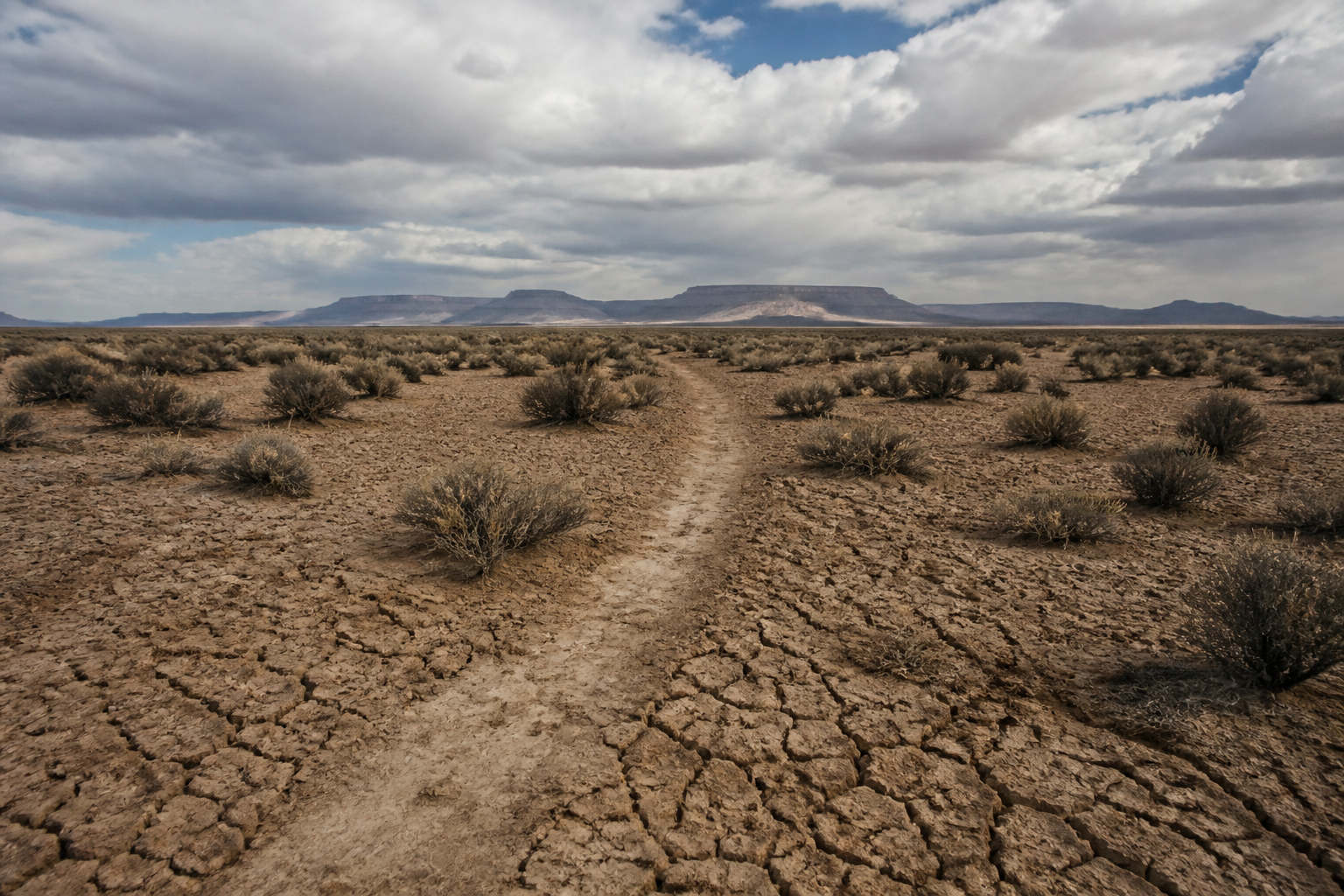
Beginning in 1864, roughly 10,000 Diné (Navajo) people were marched from their homeland in what is now Arizona and New Mexico to a reservation at Bosque Redondo, near Fort Sumner in eastern New Mexico. The distance was about 300 miles. People walked it. Those who could not keep up did not arrive.
Four years
Bosque Redondo was not a place that could support ten thousand people. The water was brackish. Crops failed. Firewood ran out. Estimates of the dead — on the march and during the internment — run to 2,500 or more.
The return
In June 1868, a treaty was signed at Bosque Redondo permitting the Diné to return home. It is one of very few treaties in this era that returned a people to their own land rather than moving them further from it. That is why it is remembered differently than the others: it ends with a walk home.
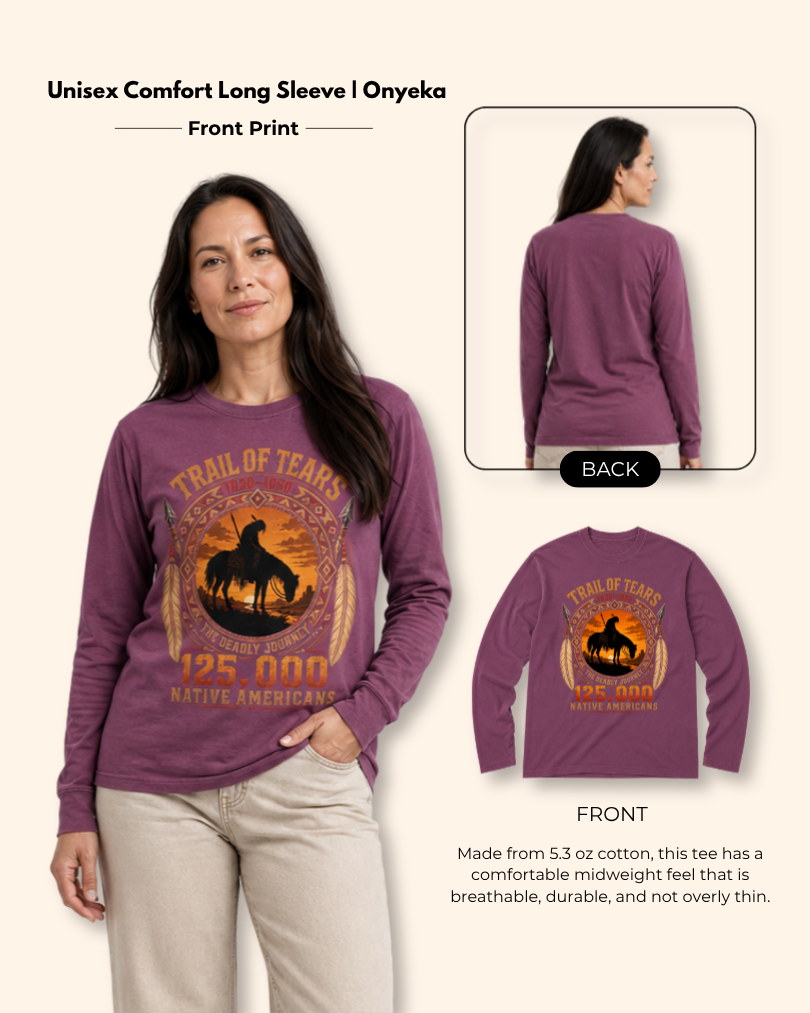
Both walks are on our shirts. Not because they are the same, but because the second one proves the first was not an accident.