If you have ever wondered why a shirt you have owned for six years looks better than the one you bought last month, this is usually the reason.
Two ways to colour a shirt
The fast way is to dye the yarn, knit it into fabric, and cut and sew the pieces. The colour is locked in before the shirt exists. It stays exactly where it started, which sounds like a good thing until you have worn it for a year and it still looks like it did in the plastic bag.
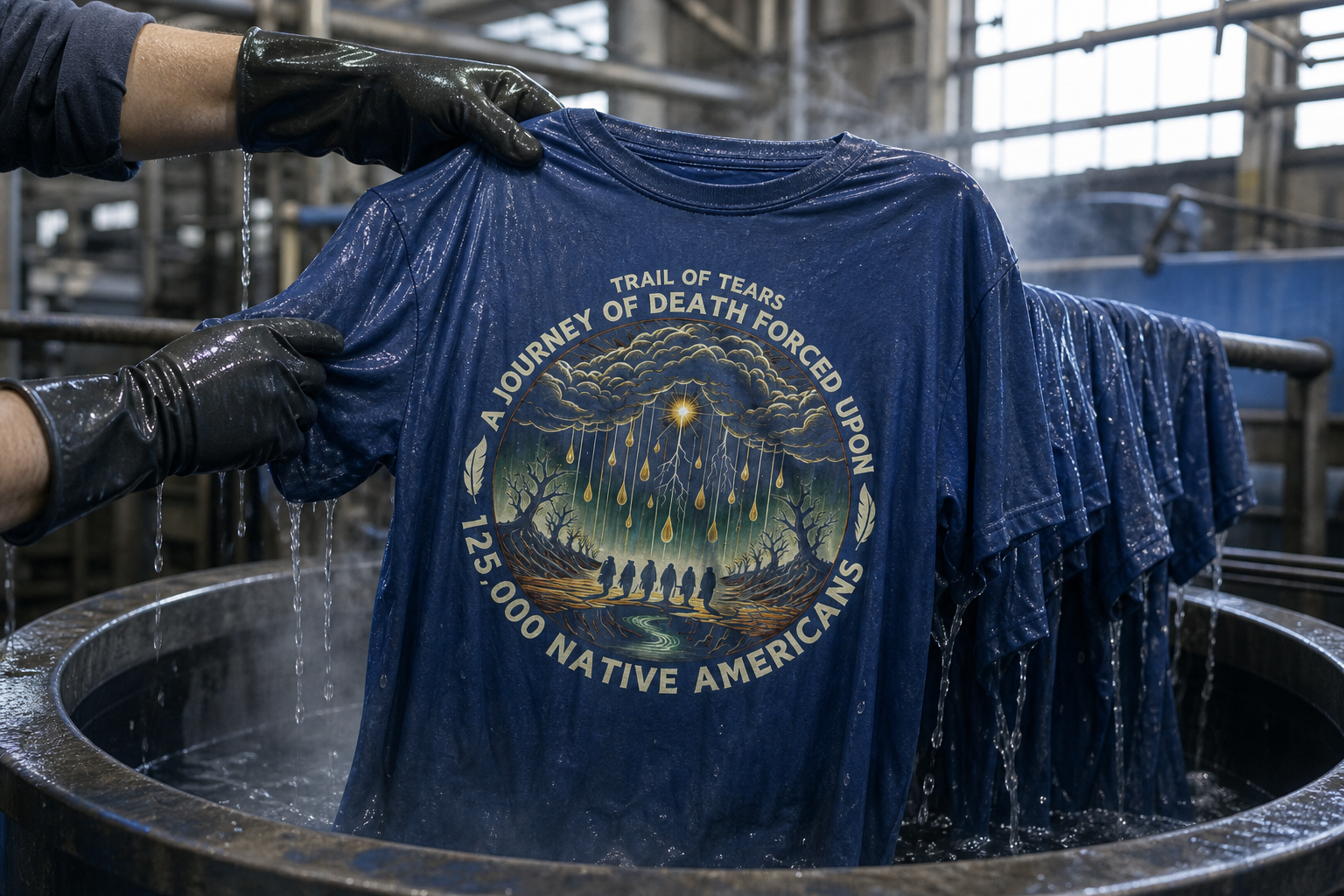
The slow way is to build the shirt first — cut, sewn, hemmed, in raw undyed cotton — and drop the finished garment into the dye. That is garment dyeing. The dye settles unevenly by design. Seams take it differently than flat panels. Every shirt comes out slightly its own.
What that costs, and what you get
It costs shrinkage, which is why garment-dyed tees are cut generously before they ever meet water. It costs consistency, which is why two shirts in the same colour will never be exactly identical. And it costs time — the fabric has to be washed, dyed, and washed again.
What you get is a shirt that arrives already broken in, and a colour that softens instead of dying. Six months in, it looks lived in. Six years in, it looks like yours.
How to keep it
Cold wash, inside out, hang dry. Skip the fabric softener — it coats the fibres and dulls both the cotton and the print. That is the whole maintenance routine. There is no step four.