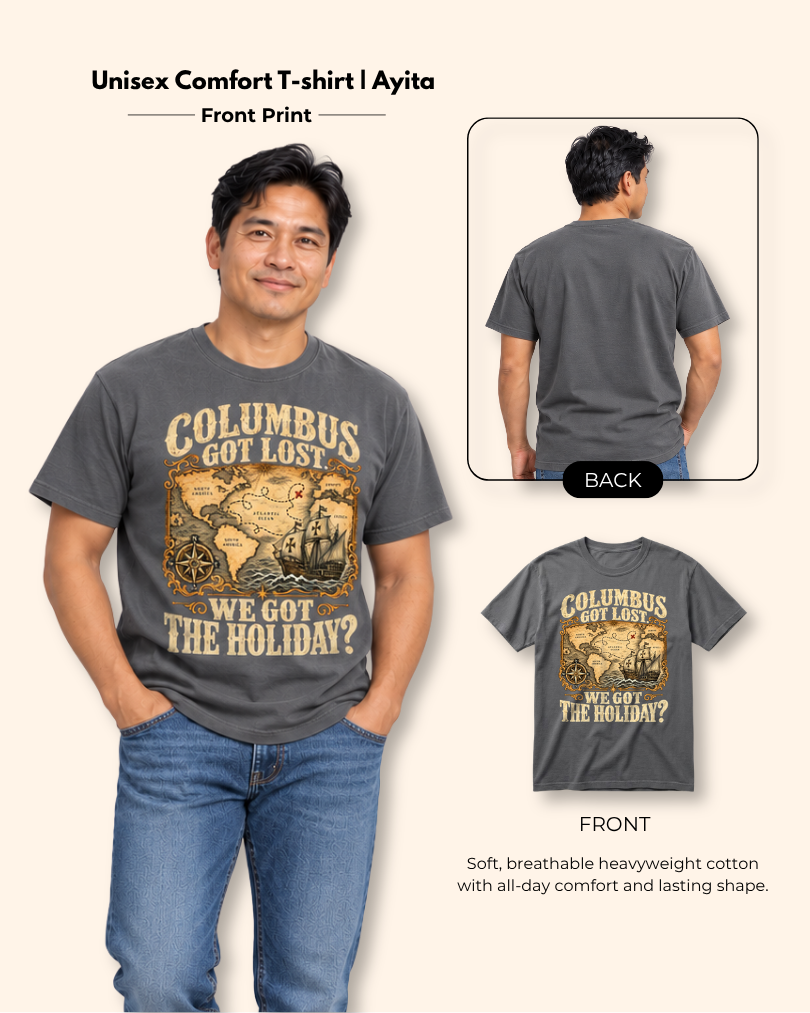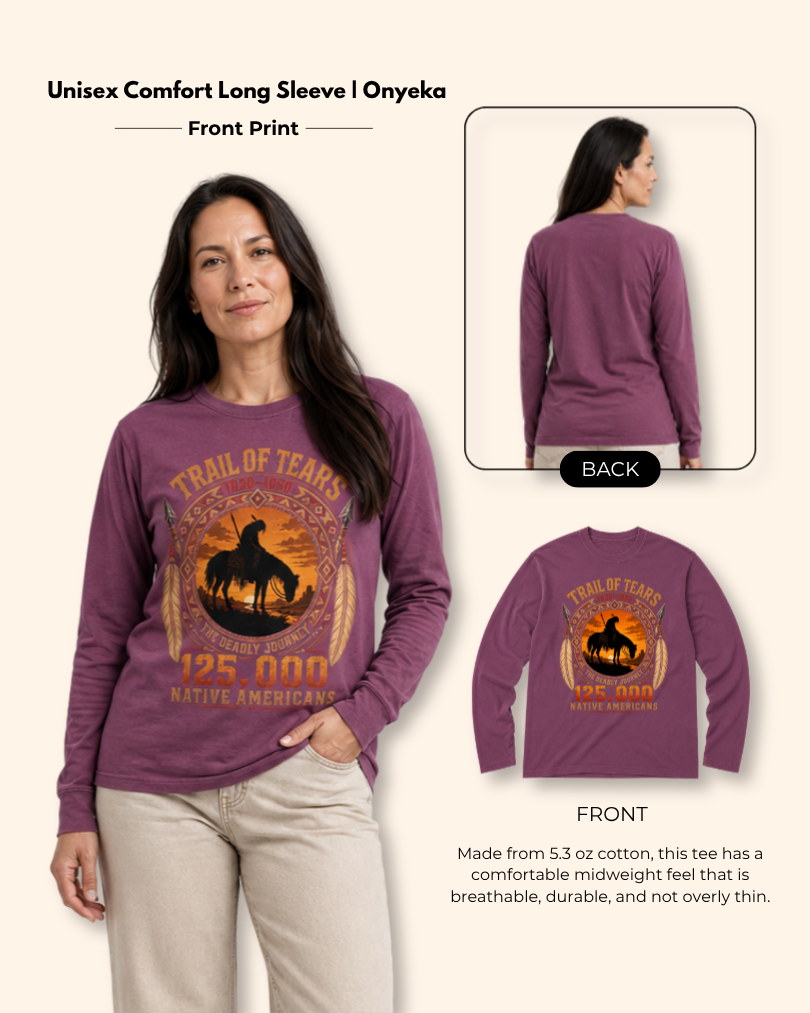
American history classes tend to teach Native history as events — acts, trails, treaties. Events do not have faces. Here are five names that do, and why each one ended up on cotton.
Sequoyah
He built a writing system for a language that did not have one, by himself, without being literate in any other language first. The Cherokee Nation adopted his syllabary in 1825, and within a few years the Cherokee were printing their own newspaper in it. It is one of the very few documented cases of a single person inventing a functional script from scratch.
Hanna Harris
A young Northern Cheyenne woman murdered in 2013. Her family had to push for the investigation themselves. Her birthday, May 5, is now the National Day of Awareness for Missing and Murdered Indigenous Women and Girls in the United States.
Jaime Black
The Métis artist who started hanging empty red dresses in public space in 2010. Not a monument, not a plaque — just the shape of a person who is not there. That is the REDress Project, and it is why the colour red carries what it carries in this movement.
Quatie Ross
Wife of Cherokee Principal Chief John Ross. She died of pneumonia on 1 February 1839, aboard a steamboat on the Arkansas River during the removal. You may have read a more dramatic version of her death involving a blanket. That version comes from a document later shown to be a forgery. The real one is enough.
Manuelito
A Diné leader who held out against removal to Bosque Redondo longer than almost anyone, and who was among the leaders present when the terms of return were settled. The treaty of June 1868 did what almost no treaty of that era did: it returned a people to their own land.
Why names
Because a number lets you look away and a name does not. Every design we make starts with one.