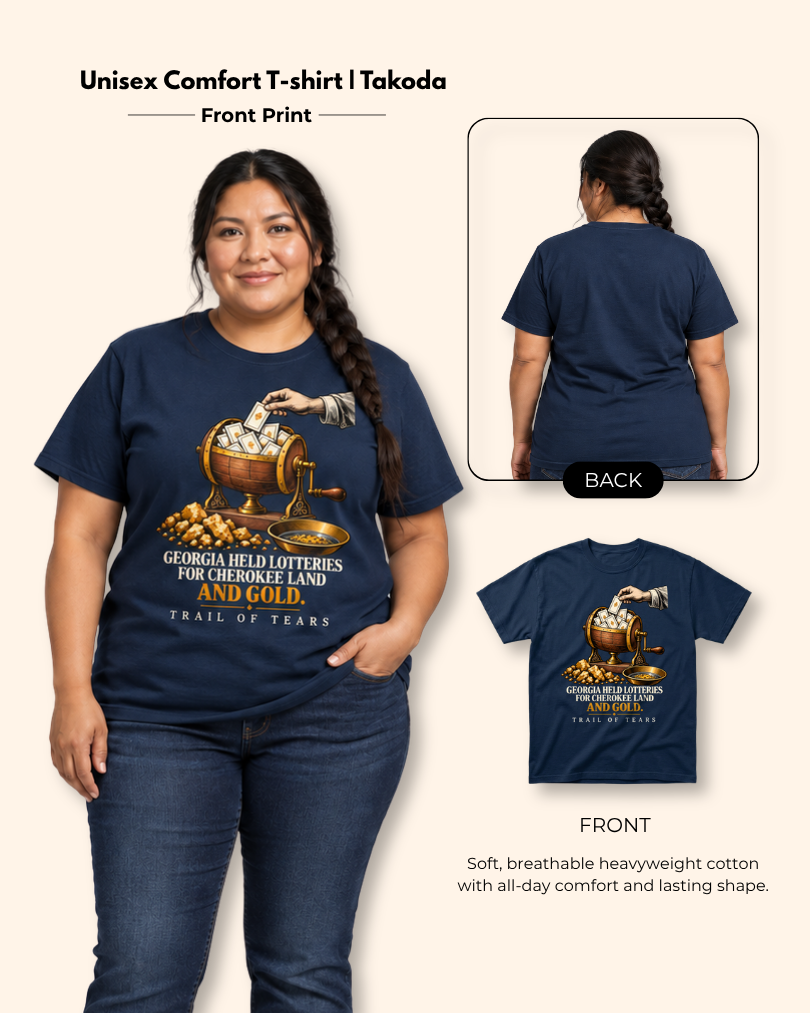
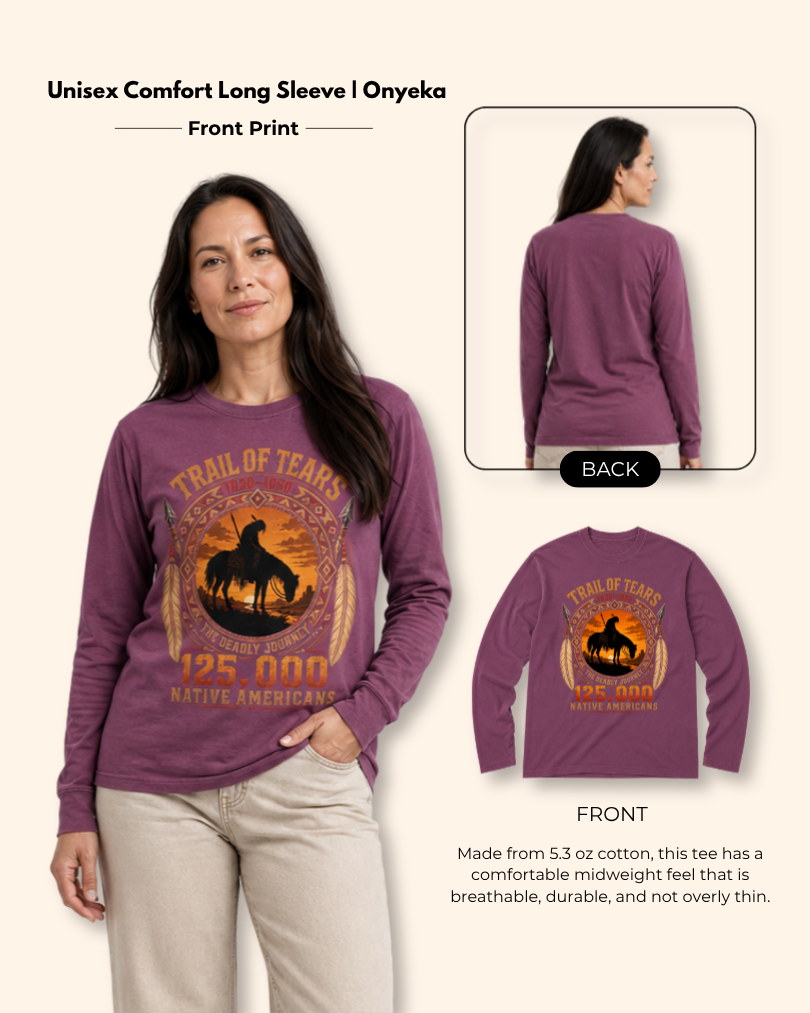
YOU WERE GIVEN A DATE AND A NAME. NOBODY EVER GAVE YOU A NUMBER.
Five nations marched out of the Southeast. Sixteen thousand Cherokee in one winter alone. About four thousand never arrived. And to this day nobody can tell you the real total.
Here is the part that should keep you up. There is no agreed death toll for the Trail of Tears. Not because historians are careless — because nobody in power was counting. The removals were logged the way freight is logged. Names went missing between the muster rolls and the far end of the road, and they were never chased down.
The man who signed the Indian Removal Act is still in your wallet. Today you find out what the count actually was, and what was done to keep it uncounted.

AN ATROCITY THIS SIZE — AND STILL NO AGREED NUMBER FOR IT.

THEY LEGISLATED IT, FUNDED IT, AND PUT IT ON A SCHEDULE
Between 1831 and 1838 the United States emptied the Southeast of five nations by act of Congress. This was not a drift of settlement or a regrettable episode. It was legislated, funded, scheduled, and carried out by soldiers under orders.
Roughly a hundred thousand people were moved. The rolls that would tell us how many arrived were never reconciled. The Trail of Tears National Historic Trail — 5,043 miles across nine states — is federally protected today. The route is preserved. The count is not.
What people carry this on


Vendor: Americanista
Kaira — Trail of Tears — Heritage Tee


Vendor: Americanista
Imala — Trail of Honor — Heritage Tee


Vendor: Americanista
Kiona — Trail of Tears — Heritage Tee


Vendor: Americanista
Talona — Stolen Native Children — Heritage Tee

THE FIVE NATIONS THEY CALLED “CIVILIZED” — AND REMOVED ANYWAY
CHEROKEE — A written constitution in 1827. Sequoyah's syllabary, a writing system invented from nothing. Their own newspaper, the Cherokee Phoenix, printing in two languages from 1828. Removed anyway.
CHOCTAW — First to go, winter 1831, under the Treaty of Dancing Rabbit Creek. Some moved in irons.
CHICKASAW — Removal charged against the proceeds of their own ceded land. They paid for it themselves.
CREEK — About 3,500 of the roughly 15,000 removed after 1836 died. Some were marched west in chains.
SEMINOLE — Three wars. And a band that never surrendered and never signed — their descendants are still in Florida today, and still call themselves the Unconquered.

THE NUMBERS THAT SURVIVED THE PAPERWORK
16,000 — Cherokee forced from their land in the 1838 removal.
~4,000 — the number the National Park Service records as never finishing that walk.
~100,000 — people removed across all five nations between 1831 and 1838.
5,043 — miles of trail, across nine states, that the United States now protects as a National Historic Trail.
5 — nations, not one.
Every figure here can be checked. That is the point. The ones nobody can check are the ones that were meant to disappear.
THE CONSPIRACY OF SILENCE

THE LIE THAT BUILT AMERICA
They called it the Indian Removal Act — as if the people were being relocated rather than driven. They called it a civilizing mission. They called it Manifest Destiny, as if the map had been handed down rather than taken.
Language did the work first. Once a thing has an administrative name, it can be budgeted, and once it can be budgeted nobody has to look at it. That is how something this size gets done in daylight and still ends up missing from the textbook.

THEY TOOK GEORGIA TO THE SUPREME COURT — AND THEY WON
March 1832. The Cherokee Nation took the state of Georgia to the Supreme Court of the United States, and won. Chief Justice John Marshall wrote that the relationship between the Indian nations and the United States was that of nations. Georgia's laws had no force inside Cherokee country.
Samuel Worcester, the missionary at the centre of the case, had already served time at hard labour rather than swear the oath Georgia demanded — and he turned down a pardon so the case could keep moving up.
They did everything right. They used the courts. They won the ruling. Six years later sixteen thousand people were marched west anyway. That is the fact worth carrying: the law was on their side, and it did not save a single one of them.
THE TRAIL OF DEATH AND TEARS

THE FIRST WINTER (1831)
The Choctaw went first, in the winter of 1831 — the worst winter in living memory in the region. They walked and rafted west without adequate food, shelter or medicine. Some were moved in irons.
A Choctaw leader, quoted in an Arkansas newspaper as the removal passed through, described it as “a trail of tears and death.”
That is where the name comes from. It was not coined by a historian later. It was said at the time, by someone walking it.

1838: THE YEAR THEY CAME WITH BAYONETS
In May 1838, General Winfield Scott's troops moved through the Cherokee Nation and drove families into holding stockades — out of kitchens, out of sick beds, out of fields still being worked. People left with what they could carry, and in most cases that was nothing.
From the stockades they were sent west, roughly 1,200 miles, through the winter of 1838–39. Not enough food. Not enough blankets. Not enough medicine.
About 4,000 of the 16,000 never finished the walk. That figure is the National Park Service's, not ours.

THE CREEK MASSACRE (1836)
The Creek resisted, and the removal that followed in 1836 was carried out under military escort. Some were marched west in chains.
About 3,500 of the roughly 15,000 removed died — a death rate near one in four. The figure comes from Grant Foreman's Indian Removal (1932), still the standard account.
Historians and the Muscogee Nation itself describe what was done to the southeastern nations as genocide. We are not the ones who need to make that case — we are pointing at who counted, and who did not.
THE EMOTIONAL DEVASTATION

THIS IS YOUR AMERICA - BUILT ON BONES
Every time you walk on American soil you are walking over people the paperwork never counted. Georgia, Tennessee, Alabama, North Carolina — the removals started on land that had been lived on for generations, and the deeds were rewritten in a single decade.
The bones are not a metaphor. The absence of a number over them is the crime that is still running.

THE CHILDREN WHO NEVER GREW UP
Imagine you are eight years old, in a yard in north Georgia, and soldiers come up the road. Your family is taken out of the house. You are put on a road west, 1,200 miles, in winter.
You watch your small sister die of hunger. You watch your grandfather die of cold. You watch your mother die of something a doctor could have treated.
And the reason is that in 1829 they found gold under your family's land.
The Georgia Gold Rush started at Dahlonega, thirty miles inside the Cherokee Nation, the year before the Indian Removal Act passed. Thousands of children lived the rest of it. Most of their names were never written down.
Trail of Tears Commemorative Collection
These are not slogans. Each design carries something specific — a date, a route, a name, a count — printed large enough that a stranger can read it from across a room and ask you what it means.
That question is the whole point. You are not buying a shirt. You are volunteering to be asked.

THE POWER YOU HOLD

BE THE PART OF THE RECORD THEY CANNOT QUIETLY EDIT
A textbook can be revised. A syllabus can drop a chapter. A person walking around in public is harder to edit.
- YOU BECOME A WITNESS — you refuse to let it stay left out
- YOU START THE CONVERSATION — a stranger reads it and asks
- YOU CARRY THE COUNT — the number nobody ever agreed on gets said out loud again
- YOU KEEP IT VISIBLE — in a checkout line, on an ordinary Tuesday, where a memorial never goes
Customers, at home, on an ordinary day
THE RIPPLE EFFECT OF TRUTH
A shirt is not a monument. It is smaller, and it moves — to the grocery store, the waiting room, the school pickup line, where a monument is never going to reach. Somebody reads it over your shoulder and asks what it means. That question is the whole mechanism.
Tap a clip for sound. Tap the name to see that design.
WHAT PEOPLE WHO ACTUALLY WEAR THESE SAY
Copied word for word out of the store’s review app — names, products and all. Including the one about the sizing.
Kimberly G.
I love the texture, coloring, and sizing of the t-shirt. The very first time I wore it I got lots of comments on it and the Trail of Tears. I love wearing it and I'm definitely ready to recommend where I got it and how the Trail of Tears is a forgotten part of American history and shouldn't be. Thank you for letting me be an important way of spreading the story.

Barbara B.
Totally awesome and comfortable T-shirts that will make people stop and think about our history.

Elaine W.
Love this tshirt I wear it to send a message to others and to remind others of what the native Americans went through and are continuing to have to fight for your home land. I also think it looks good and respectful.
Michael
Beautiful shirt. I will proudly wear it. I will do my best to educate myself and others about this tragic time in our history.

Melissa P.
I ordered the Trail of Tears shirts in 2 different styles each for my Uncle, my sister, & myself. The shirts arrived promptly & my family loves their shirts! We ordered them in black & in blue!! They are soft, comfy, and the artwork is so beautiful!! ❤️
Lisa L M.
Great quality T-shirt, nice and thick. I ordered a large and it’s huge. I think it’ll shrink down in time tho…. I did read on the website to get your normal size. I like a big T-shirt but it’s a lot bigger than a regular large so I would size down one if I were reading this review I weigh about 115 pounds and I wear a boys large crewneck T-shirt. Oh well, I’ll wear it anyway …part Cherokee my family was from Kentucky.. I have always been a very spiritual person and believed in the land and the animals, and when I saw these shirts online, they called to me. Good job guys.!!! they really are beautiful!!
IF IT ISN'T RIGHT, YOU ARE NOT STUCK WITH IT
Buying a shirt online from a shop you have not bought from before is a small act of trust. Here is exactly what happens if it goes wrong — no countdown, no invented statistics, nothing we cannot stand behind.