
It is often called a battle. It was not a battle. On a cold morning in 1890, near a creek in South Dakota, the long wars between the United States and the Plains nations ended in a massacre. This is what happened at Wounded Knee, and why the name still carries weight.
The Winter of 1890
By 1890 the Lakota had been confined to reservations, their food rations cut, their way of life under constant pressure. A spiritual movement known as the Ghost Dance offered hope of renewal. The government read it as a threat. Weeks earlier, the revered leader Sitting Bull had been killed during an arrest. Fear hung over the plains.
Wounded Knee Creek
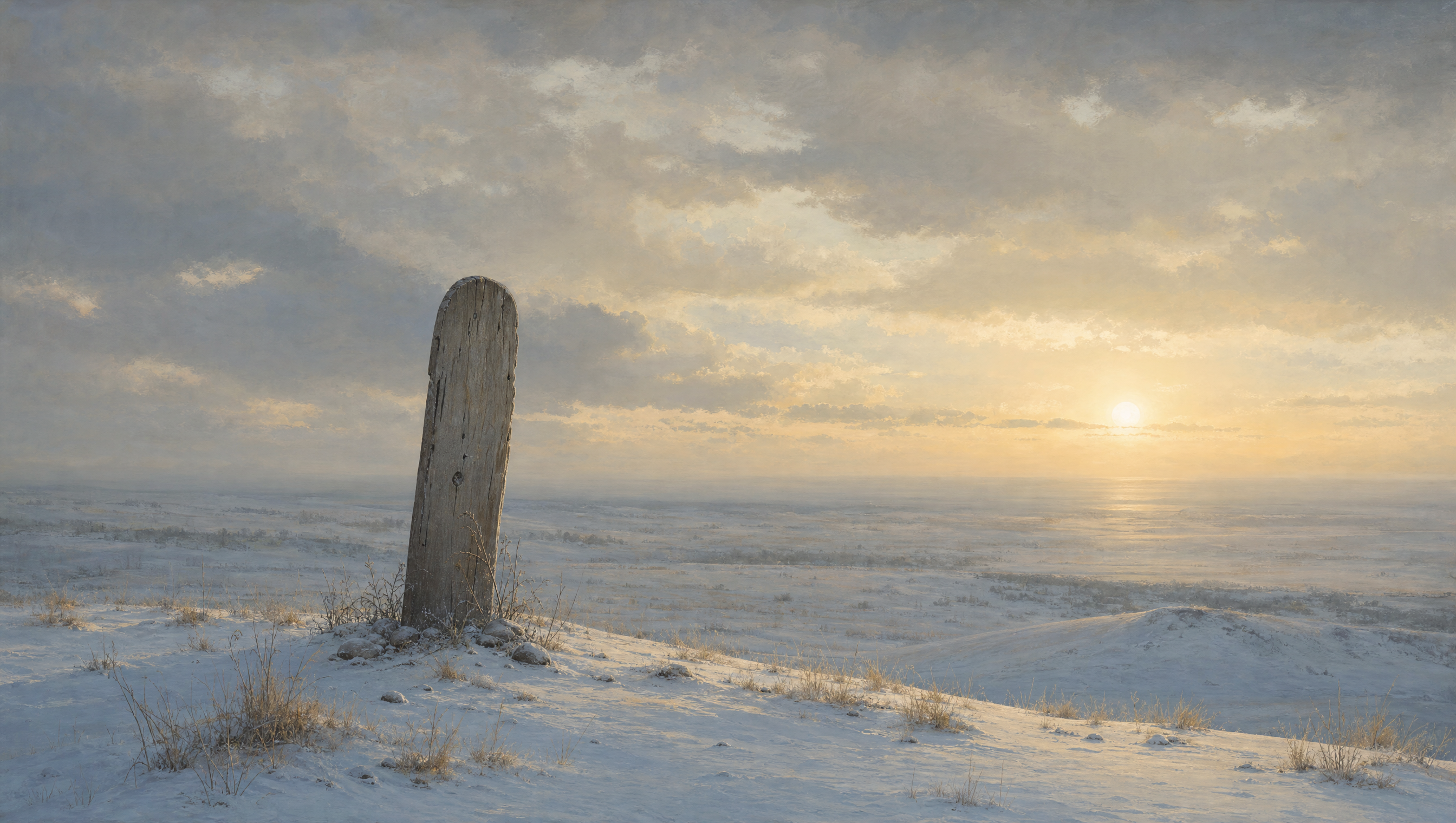
A band of Lakota led by Spotted Elk, also known as Big Foot, was intercepted by the United States 7th Cavalry and brought to camp beside Wounded Knee Creek. On the morning of December 29, as soldiers moved to disarm them, a shot was fired. The cavalry opened fire on people who were surrounded and largely unarmed.
Around 250 to 300 Lakota were killed. Many were women and children.
Why the Word Matters
For a long time this event was recorded as a battle, and medals were given for it. Calling it what it was, a massacre, is not a small thing. Words decide what a nation chooses to remember and what it allows itself to forget. Wounded Knee is often named as the end of the Indian Wars. For the Lakota it is not a closing date in a textbook. It is a grief carried across generations, and a name spoken with care.
Say their names with respect.
Our Wounded Knee collection was made to honor those who were lost, and to keep the truth of that morning from being softened. Drawn with reverence, in partnership with Native artists.
Explore the Wounded Knee CollectionSources and further reading: the National Park Service, the National Museum of the American Indian, and the Oglala Lakota Nation. Casualty estimates vary across sources. We welcome correction from descendant communities.