
The Trail of Tears is remembered, if barely. The Long Walk of the Navajo is remembered even less. Yet for the Diné people it is the wound at the center of their modern history. This is what happened, and why it still matters.
A Homeland Burned
In 1863 the United States set out to remove the Navajo (Diné) from their homeland in the canyons and high desert of the Southwest. Soldiers under Kit Carson did not fight a single decisive battle. They destroyed the means to live. Cornfields were burned. Peach orchards in Canyon de Chelly, some generations old, were cut down. Sheep and horses were killed or seized. Starved out, families had little choice but to surrender.
The Walk Itself
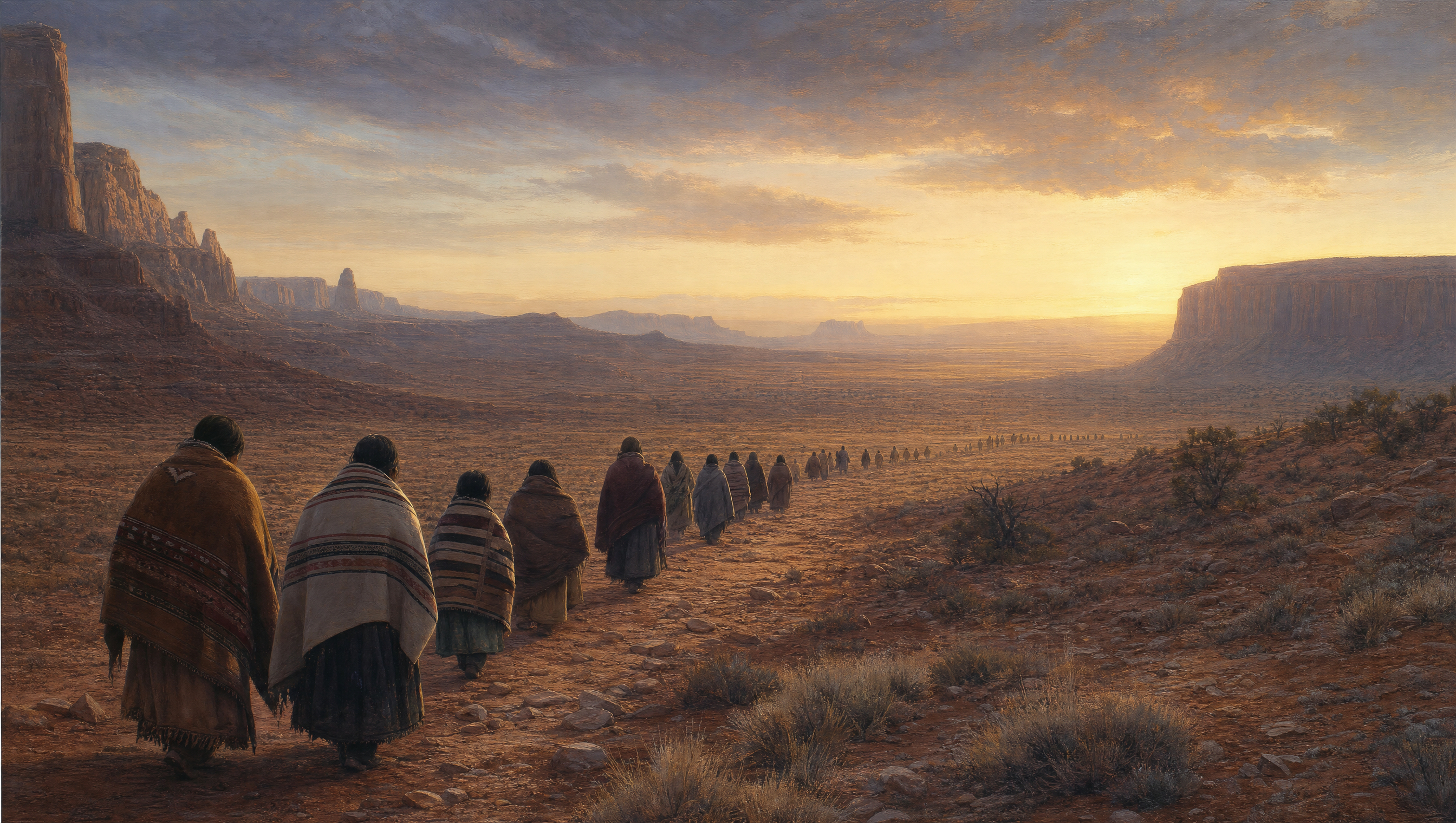
Beginning in 1864, the Diné were forced to march roughly 300 miles east to a barren camp called Bosque Redondo, near Fort Sumner in New Mexico. They walked in winter and in heat, on foot, with little food. Those who could not keep up were left behind. The Diné remember the place of their captivity as Hwéeldi.
More than 8,000 people were marched away from everything they knew. Hundreds did not survive the road.
Four Years at Bosque Redondo
The camp was a place of suffering. The water made people sick. The soil would not grow enough to feed them. Disease moved through the crowded quarters. Thousands more died during the four years of confinement.
The Return
In 1868 the Diné did something almost no other removed nation did. They negotiated a treaty and were allowed to return to a portion of their own homeland. That return is why the Navajo Nation stands today where its ancestors lived. The Long Walk is not only a story of loss. It is a story of endurance, and of a people who refused to vanish.
Carry the memory of the Long Walk.
Our Long Walk collection honors the Diné journey and return. Drawn with reverence, in partnership with Native artists.
Explore the Long Walk CollectionSources and further reading: the National Park Service, the Navajo Nation, and the Bosque Redondo Memorial at Fort Sumner. Estimates vary across sources. We welcome correction from descendant communities.