“You can put the children and me out too.”
Her husband collapsed in the wagon with cholera. The driver said he couldn't carry him. Elsie answered in one line — and it's recorded in the Indian Pioneer Papers, 1937, as her great-granddaughter told it.
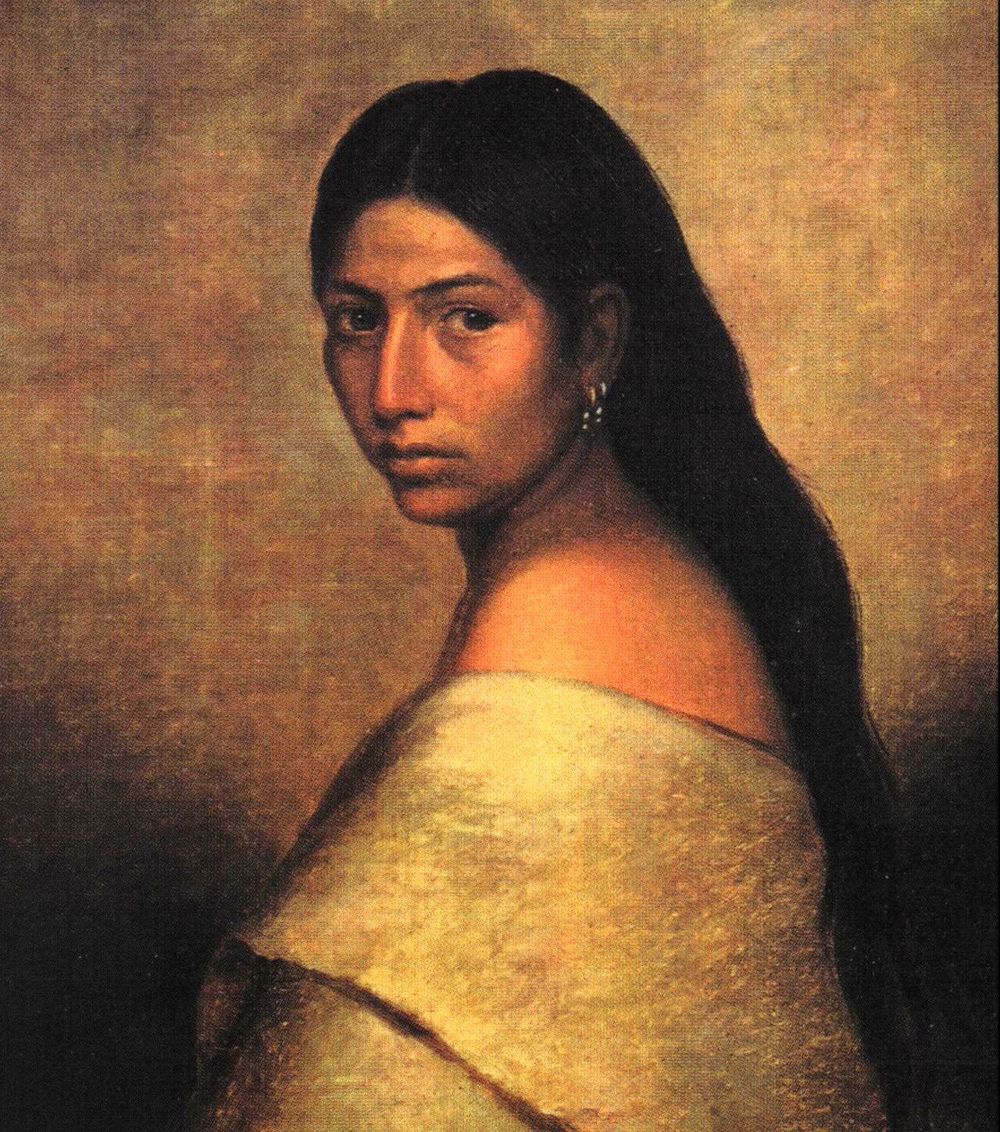
Free size exchange · Printed & shipped in the USA
Two lines, recorded
Elsie was Choctaw, from the Pearl River in Mississippi. In 1831 the wagons came. At a flooded crossing her husband collapsed in the wagon with cholera.
The driver said:
“I will have to put him out — we can't afford to have any one with the cholera along.”
Elsie said:
“You can put the children and me out too.”
Family testimony recorded in the Indian Pioneer Papers (1937), transcribed from Josephine Usray Latimer, Elsie's great-granddaughter.
What the two boys did that night
He lasted twenty-four hours and died beside the road. Her two boys, ten and twelve, dug the ground with sticks and their knives, piled rocks and dead branches over him, and cut marks into every tree around the spot — because they meant to come back for him. They never did.
They kept a fire all night against the wolves and panthers.
The one thing that came off that road
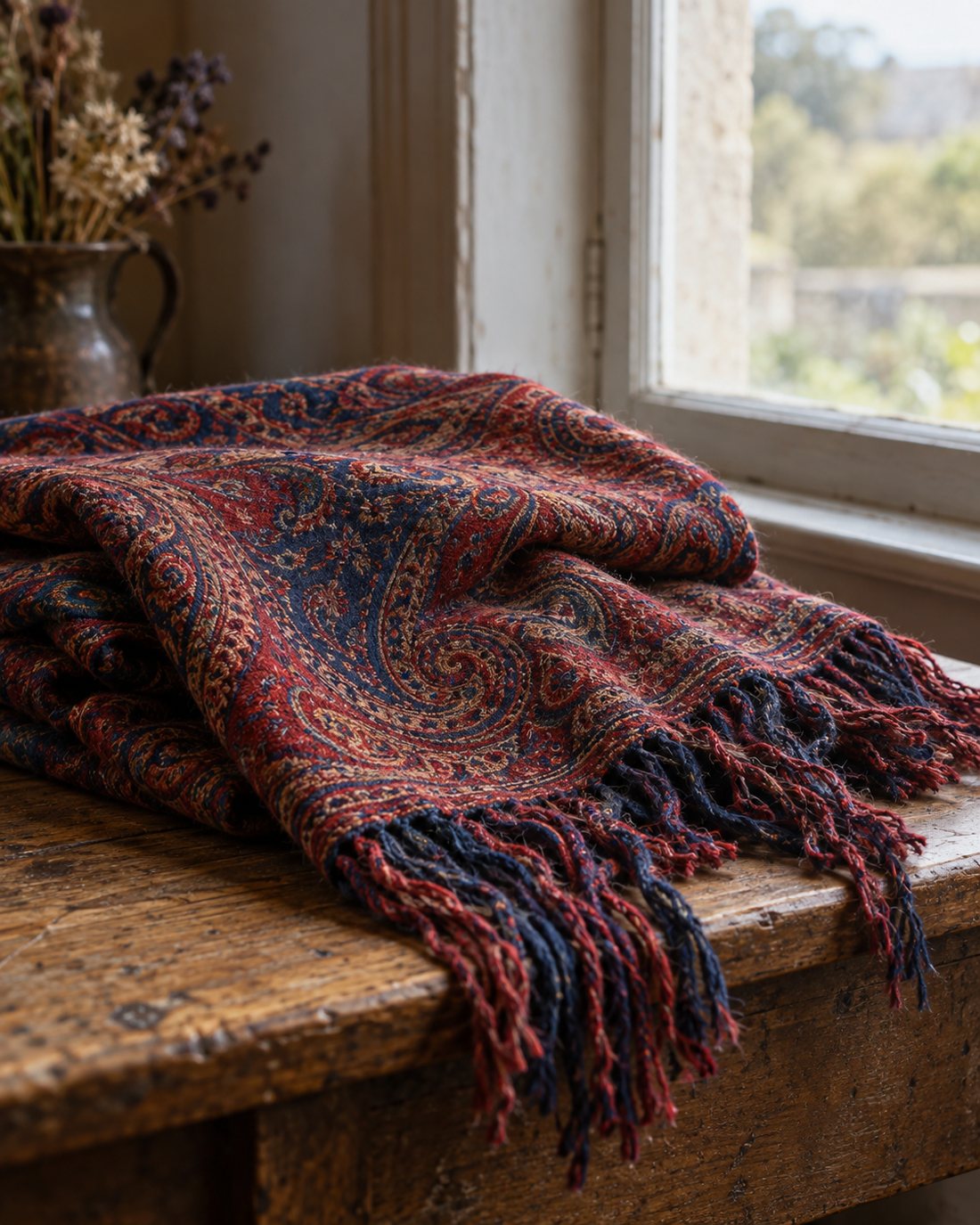
What did come off that road was a paisley shawl. Decades later, at her son's wedding, Elsie put it into her daughter-in-law's hands.
It is the only thing from that road anyone still has.
The shawl is a detail of the 1937 testimony — not an object we hold, and not any other family's heirloom.
The Chapters They Omitted
“On the Trail of Tears itself, the government that moved them never counted the ones who died.”
— as the National Park Service puts it: No one knows how many died.
So we printed the road onto cloth
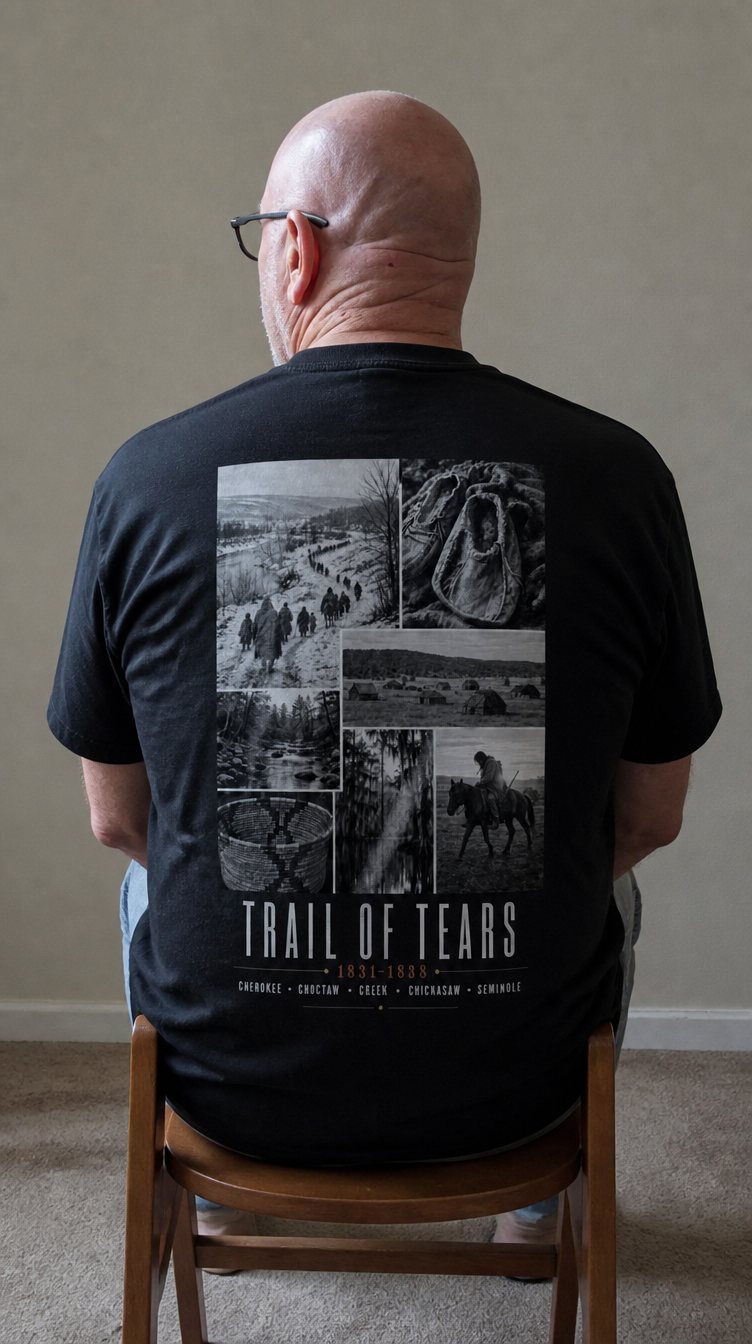
The back of this shirt is seven black-and-white photographs — the crossing, the snow, the camps, the basket, the moccasins, and the ones who kept walking.
TRAIL OF TEARS
1831 – 1838
CHEROKEE · CHOCTAW · CREEK · CHICKASAW · SEMINOLE
The front is plain. The story sits on your back, where you can't see it — and where everyone behind you can.
This is not an effort to rewrite history. It's an effort to finally, fully, read it.
What you're wearing
- Printed on the back — front stays plain, the story stays behind you
- Seven-photograph collage in black and white, on a dark heavyweight tee
- Garment-dyed heavyweight cotton — softens with every wash
- Made in the USA — printed and shipped on American soil · unisex S–4XL
Wear one. Hand one down.
Two tees, free shipping — one for you, one to hand down.
Free size exchange. Buy 2 tees — free shipping · No code, no games: two shirts ship free, at full price.
Printed & shipped in the USA
7-day replacement — you never mail anything back.
Straight answers
Why is the print on the back?
Because that's how the story works — you carry it where you can't watch it, and other people read it. No one sees it from the front; everyone sees it when you walk away.
Is this respectful — or is it using Native history to sell?
Fair question. The facts on this page cite their sources (the 1830 Treaty of Dancing Rabbit Creek, the Indian Pioneer Papers of 1937, NCAI's state-standards report, the Department of the Interior's boarding-school investigation, the National Park Service). We don't put words in any real person's mouth, and portraits and scenes are marked as illustrations or period paintings, never as photographs of the people named.
Why are all five nations on one shirt?
Because the removal wasn't one nation and wasn't one year. The Choctaw went first, in 1831; the Creek, Chickasaw, Cherokee and Seminole followed. The row of names is there so no one reads this shirt and thinks it happened once, to one people.
Will the print fade or crack?
Our DTG prints hold color and detail with normal care: wash inside out in cold water on a gentle cycle, tumble low or air dry. Some natural wear over time is normal for cotton.
What if the size is wrong?
Free size exchange, and a 7-day replacement — you never mail anything back.
“It is the only thing from that road anyone still has.
Now it can be the thing that starts the conversation.”
Free size exchange · Wear one. Hand one down.
