87% of state history standards contain no mention of Native Americans after the year 1900. 27 states do not name a single one anywhere in K-12. That is not an oversight — it is the finding of a national study.
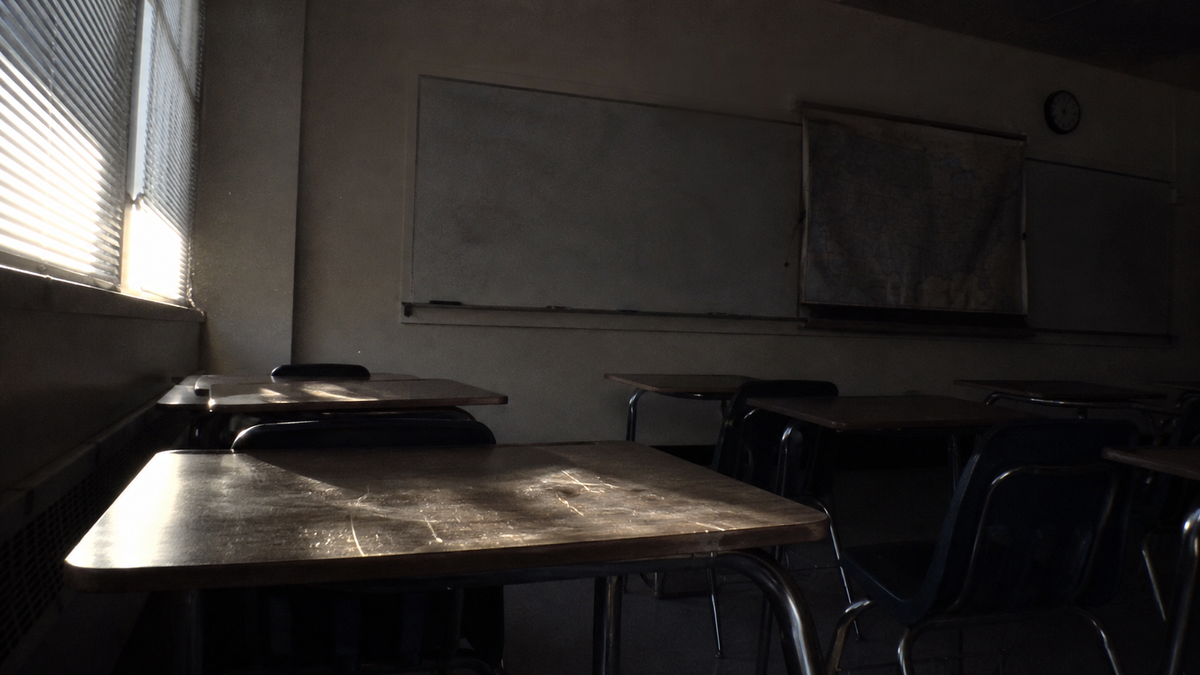
You probably remember about four things from school: Thanksgiving, a war or two, a treaty nobody explained, and then nothing. You may have assumed you forgot the rest. You did not forget it. It was not in the book.
In 2019 the National Congress of American Indians read every state's history standards and published what it found. The report is called Becoming Visible, and the number it is known for is 87%.
Below are four of the chapters that fall on the wrong side of that line. Every figure names its source, because the whole point is that you can check them — and almost nobody was asked to.
FOUR NUMBERS FROM AFTER 1900 — AND ONE FROM JUST BEFORE
87% — of state history standards with no mention of Native Americans after 1900. NCAI, Becoming Visible, 2019.
27 — states that name no Native American anywhere in K-12. Same report.
417 — federal Indian boarding schools, across 37 states and territories. U.S. Department of the Interior, Federal Indian Boarding School Initiative, Vol. II, 2024.
973 — children confirmed to have died at them. The same report found 74 burial sites at 65 of the schools, and says the true figure is higher. Same report.
150,000 → 30,000 — the Native population of California, 1846 to 1873. Standard demographic estimates; the California Governor's Office issued a formal apology for it in 2019.
What people carry this on


Vendor: Americanista
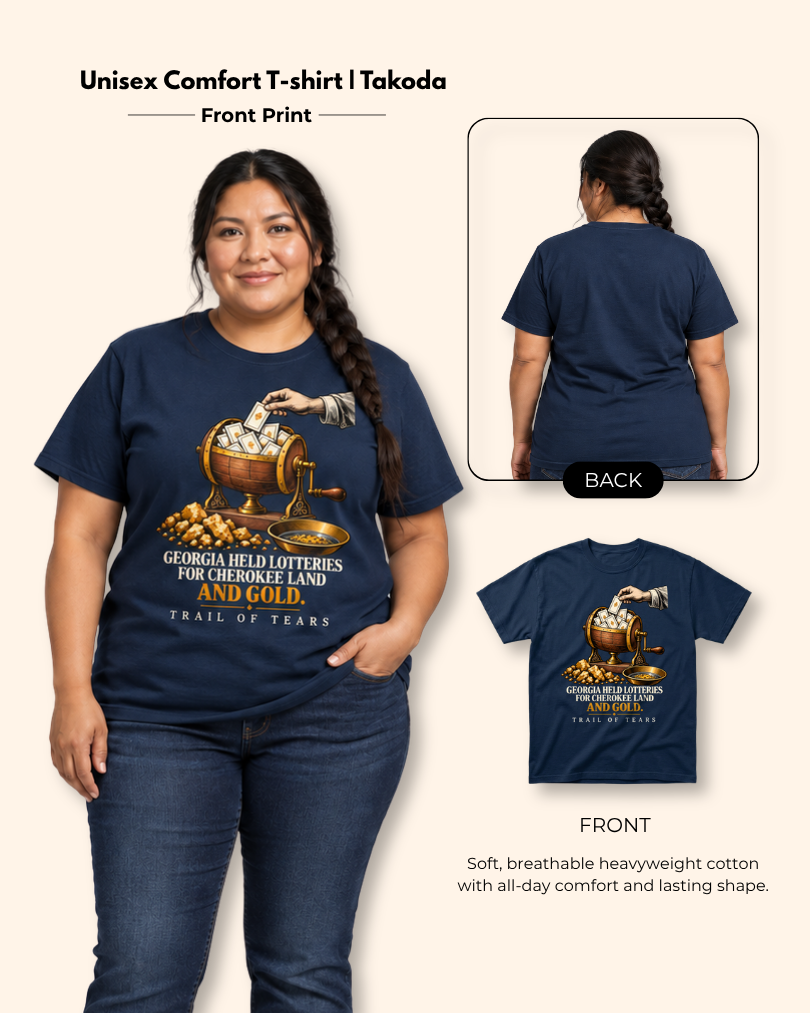
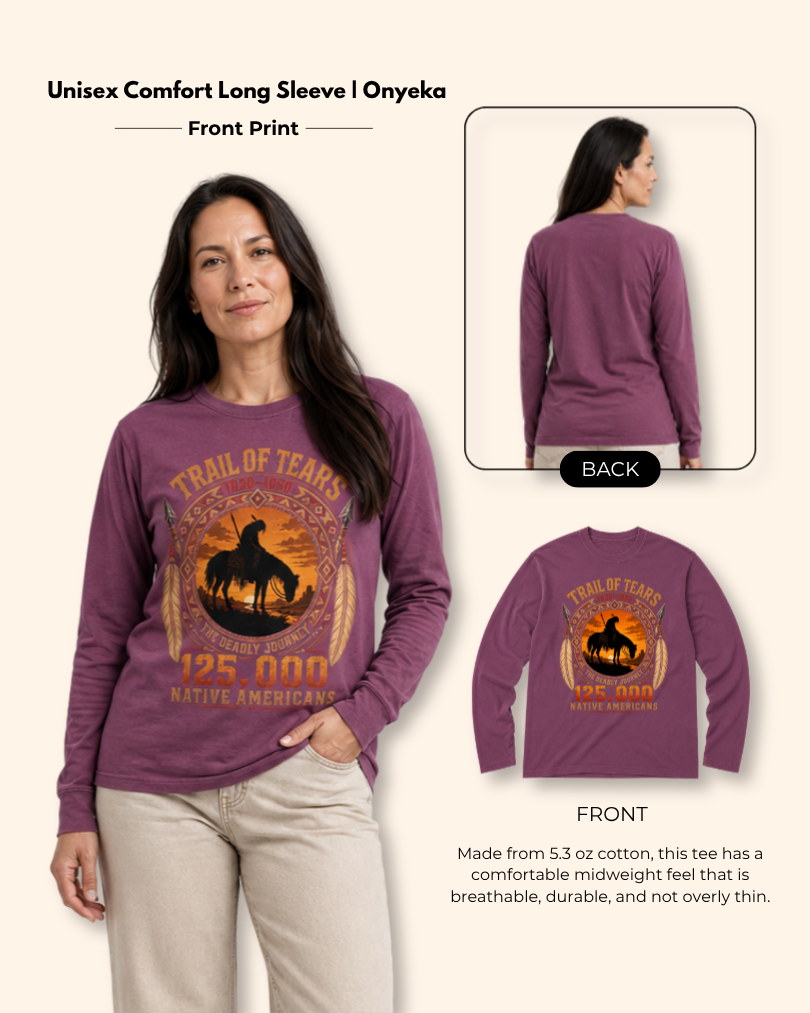
Kaira — Trail of Tears — Heritage Tee


Vendor: Americanista
Imala — Trail of Honor — Heritage Tee


Vendor: Americanista
Kiona — Trail of Tears — Heritage Tee


Vendor: Americanista
Talona — Stolen Native Children — Heritage Tee

THE CHAPTER THAT ENDS AT 1900
Read the standards and a pattern appears immediately. Native history is allowed to exist in the colonial period and the 1800s, and then it simply stops. The twentieth century — boarding schools, termination, relocation, the fight for the vote, everything still being argued in court today — is largely absent.
The report calls the result “the invisibility of Native peoples”. Not a lie in the textbook. A hole where the rest should be.
And it has a second effect nobody plans for: it teaches everyone else that this is finished history. Past tense. Over.

417 SCHOOLS. 973 CHILDREN WHO DID NOT COME HOME.
Between 1871 and 1969 the United States ran or funded 417 Indian boarding schools across 37 states and territories. Children were taken from their families and forbidden their own language.
In 2024 the Department of the Interior finished reviewing roughly 103 million pages of federal records and confirmed 973 child deaths, along with 74 marked and unmarked burial sites at 65 different schools. The report states plainly that the real number is higher.
This is federal government paperwork about the federal government. It took until 2024 for anyone to add it up.

WOUNDED KNEE, 29 DECEMBER 1890
On a frozen creek in South Dakota, the Seventh Cavalry opened fire on a Lakota camp that was in the process of being disarmed. Most of the dead were women and children. Some of the wounded froze where they fell before anyone came back.
How many died? The published estimates run from about 150 to about 300. More than a century later there is still no agreed figure, for the same reason there is no agreed figure for the Trail of Tears: the people doing the counting were the people who would have had to explain it.
Twenty soldiers received the Medal of Honor for that day. Congress is still being asked to revoke them.

CALIFORNIA: 150,000 TO 30,000 IN ONE LIFETIME
In 1846 roughly 150,000 Native people lived in what became California. By the early 1870s the figure was around 30,000 — a fall of more than 80% inside a single lifetime, through disease, starvation, displacement and killing.
The killing was not only unofficial. The young state paid bounties and reimbursed militia campaigns against Native communities. In 2019 the Governor of California issued a formal apology and used the word genocide for what the state itself had done.
An apology in 2019 for something the schools of 2019 were mostly not teaching.

WHAT THE MISSING CHAPTER COSTS EVERYONE ELSE
The report is blunt about who this damages. For Native students it produces a classroom in which they are caricatured or simply absent — and the lowest educational attainment rates of any group in the country.
For everyone else it produces something quieter and more durable: the belief that all of this is over. That the harm ended with the last battle in the last chapter, so nothing now is anyone's business.
You do not need ancestry to object to a chapter being removed. You only need to have been in the room when it was taught. That is the whole claim being made here, and it is available to anyone.
Trail of Tears Commemorative Collection
If the syllabus will not carry it, something else has to. Every design in this collection prints something specific and checkable — a date, a route, a nation, a count — large enough that a stranger can read it across a room and ask you what it means.
That question is the whole mechanism. You are not buying a shirt. You are volunteering to be asked.

Customers, at home, on an ordinary day
THE RIPPLE EFFECT OF TRUTH
A shirt is not a monument. It is smaller, and it moves — to the grocery store, the waiting room, the school pickup line, where a monument is never going to reach. Somebody reads it over your shoulder and asks what it means. That question is the whole mechanism.
Tap a clip for sound. Tap the name to see that design.
WHAT PEOPLE WHO ACTUALLY WEAR THESE SAY
Copied word for word out of the store’s review app — names, products and all. Including the one about the sizing.
Peggy F.
So comfortable and created conversation with the younger crowd that has no idea about the trail of tears. A mobile history lesson, you might say.

Elizabeth H.
I don't know how to send you pictures but I want you to know I am happy to wear my t-shirt often. It's soft and I feel there are too too many people in our world who have no clue of this disgraceful horrific time from our past. So much history! So much never told!

Laura P.
Beautiful t-shirt and soft material. I will wear proudly offering true history a chance.

Patrick N.
I like it and wear it and people make comments to the positive about it. Well built shirt.
Ann E.
This t shirt is very nice! The material used is a nice weighted cotton and will last a long time. I received the shirt a lot sooner than I expected. I would order from this company again.
Jack C.
Every where I go I get compliments or they ask me about it. Thank you for all the correct history lessons.

Lisa
order your size I ordered a size bigger and it’s really big but other than that, the quality of the shirt was wonderful, thick nice coloring just a little big
IF IT ISN'T RIGHT, YOU ARE NOT STUCK WITH IT
Buying a shirt online from a shop you have not bought from before is a small act of trust. Here is exactly what happens if it goes wrong — no countdown, no invented statistics, nothing we cannot stand behind.